Pipe Storage and Protection
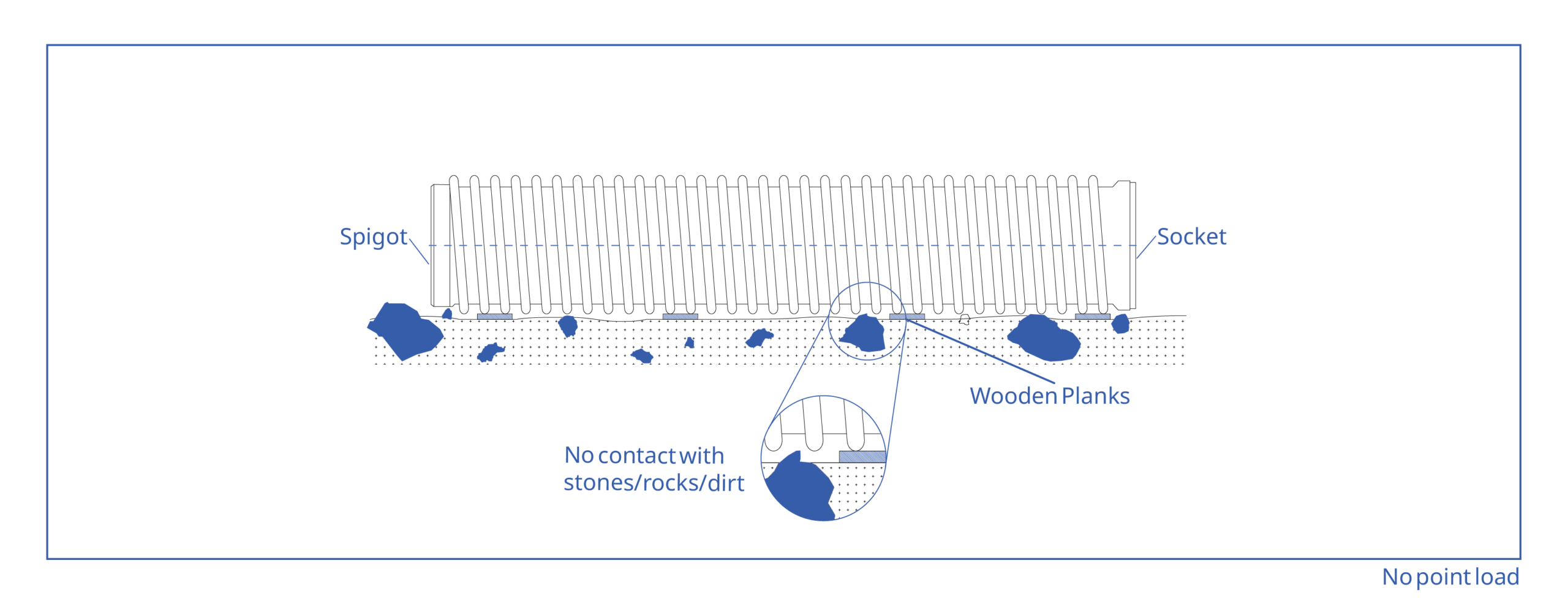
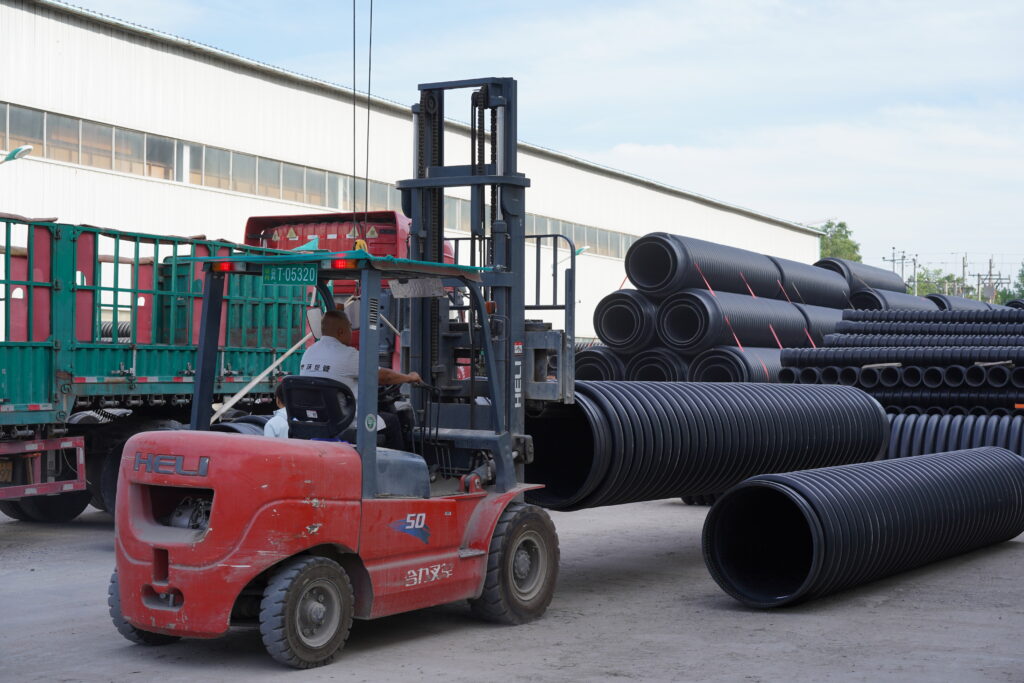
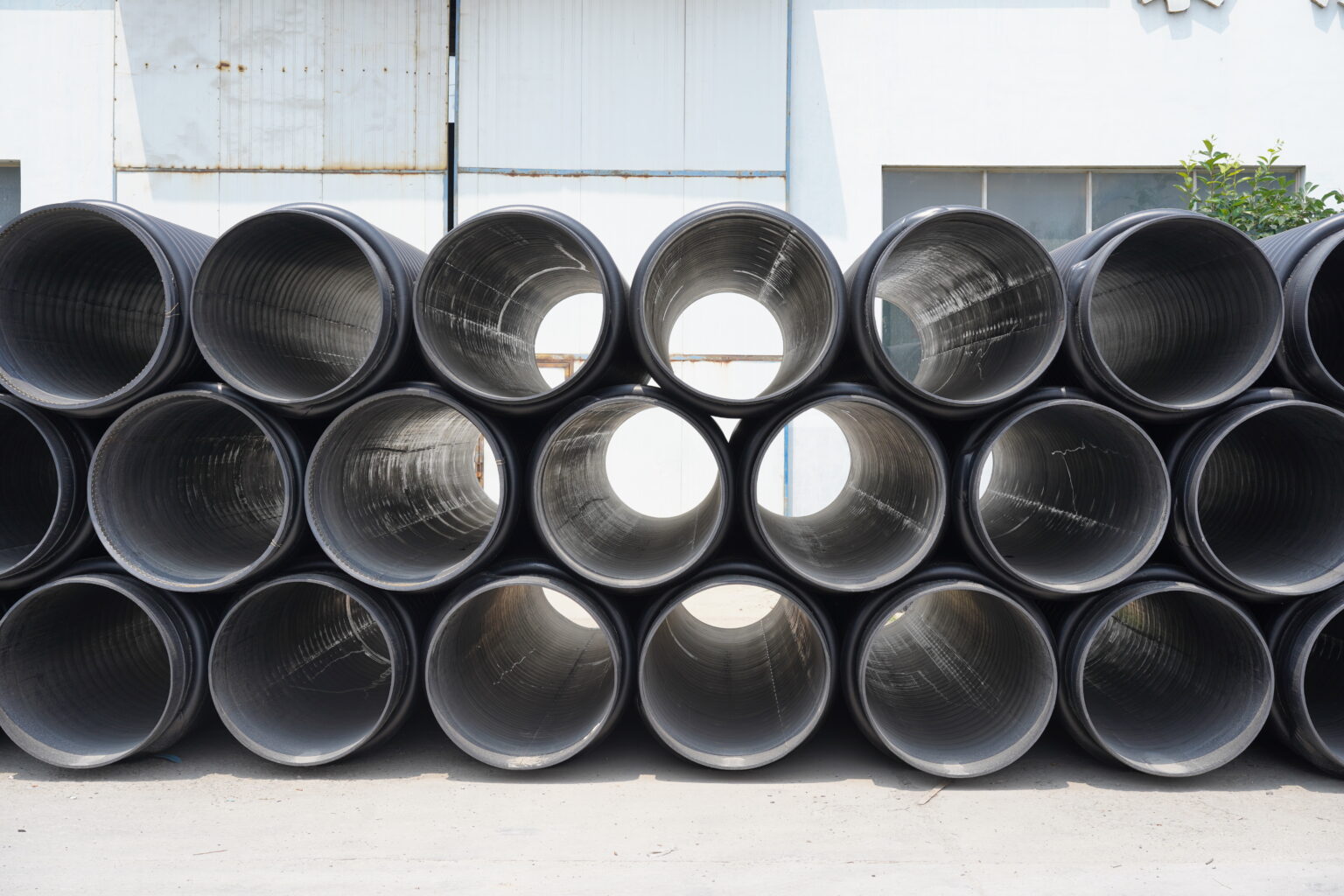
Pipes should be stored on firm, level, and clean ground that is free from stones, sharp-edged objects, construction debris, and other materials that could damage the pipe surface. The storage arrangement must prevent excessive deformation, movement, or concentrated loads and should provide adequate protection against dirt, impact, and mechanical damage.
Particular attention should be given to the socket, spigot, and electro-fusion wire located inside the socket. These components are essential for achieving a reliable welded joint and should be protected from impact, contamination, and deformation throughout the storage period.
Protection Before Storage
Before placing the pipes into storage, inspect the original packaging and protective materials to ensure that they have not been damaged during transportation. If any damage is found, carefully inspect the socket and spigot areas to ensure that they remain clean and free from foreign materials.
If dirt or other contamination is present, clean the affected areas thoroughly with clean water and allow them to dry as required. After cleaning, the socket and spigot should be covered with suitable protective film to prevent further contamination during storage.
When applying protective film, take special care that the adhesive does not come into contact with the outer surface of the spigot or the inner surface of the socket, particularly the electro-fusion wire area. Adhesive residue or contamination in these areas may interfere with the welding process and compromise the quality of the final joint.
Stacking and Support
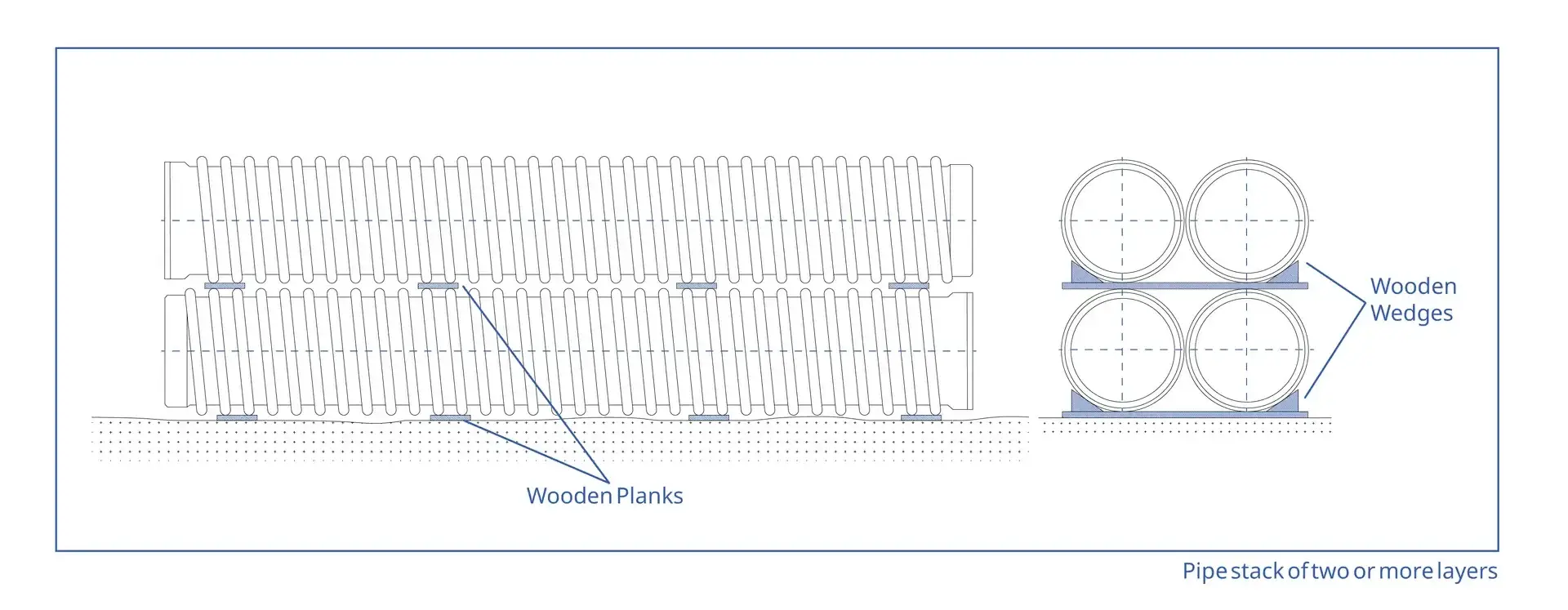
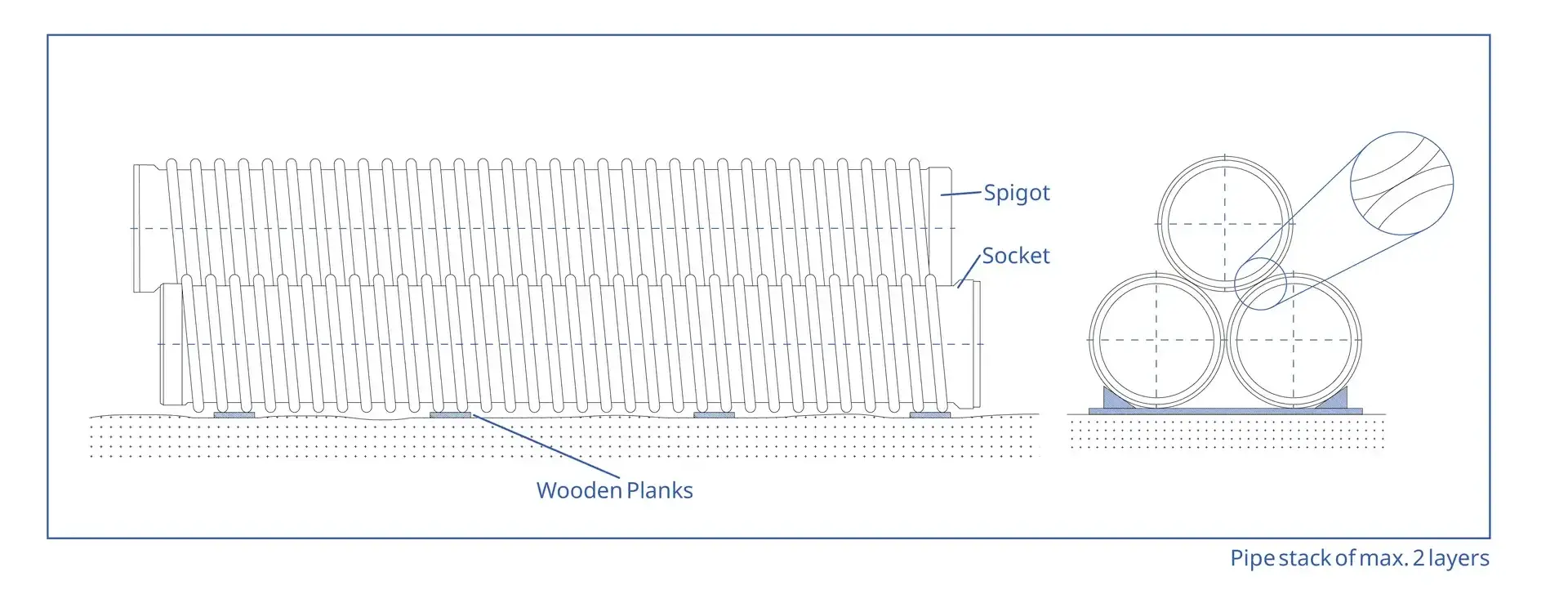
Under suitable storage conditions, pipes may be stacked to a maximum height of 3 m, provided that wooden planks with a minimum width of 200 mm are placed underneath the pipes. The planks should provide stable and continuous support and help distribute the pipe load evenly.
If wooden planks or suitable supporting materials are not used, the maximum stacking height of 3 m does not apply. Even when the ground surface is smooth and level, the stack height should be limited to 1 m to reduce the risk of deformation or instability.
The pipe sockets should be positioned carefully so that the socket bell does not come into contact with the pipe body or the spigot end of another pipe. Direct contact or excessive loading on the socket may result in deformation and could affect subsequent jointing operations.
In very cold weather, pipes should be placed on suitable supports rather than directly on the ground. This helps prevent the pipes from freezing to the ground and reduces the risk of damage during subsequent handling.
Internal Pipe Support
Additional internal support should be provided when the outside temperature exceeds 25°C, the pipe diameter is greater than DN/ID 1700 mm, or the storage period exceeds 24 hours.
In such circumstances, the pipe should be supported internally between the bottom and crown to minimize deformation. A suitable beam may be installed inside the pipe, with small wooden planks or other appropriate protective materials placed between the beam and the pipe wall. The supporting arrangement should distribute the load without creating concentrated pressure on the pipe surface.
Storage of Manholes and Fittings
Manholes and fittings should be stored in the same orientation in which they will be installed in the trench. This reduces unnecessary handling and helps prevent deformation or accidental damage before installation.
All stored products should be kept away from heavy construction traffic, falling objects, and other sources of mechanical impact. The storage area should also be clearly organized to allow safe access for inspection and handling.
Prevention of Point Loads
Point loading should be avoided throughout the entire storage period. Pipes should be supported on wooden blocks, stacks, or planks so that they do not come into direct contact with uneven, dirty, rocky, or contaminated ground.
Proper support distributes the weight of the pipes more evenly, reduces localized stress, and helps maintain the original geometry of the pipe. Correct storage and protection are therefore essential to ensure that Krah pipes, sockets, spigots, and electro-fusion components remain in suitable condition for subsequent installation and welding.