What is Krah Pipe / Spiral Wound Pipe?
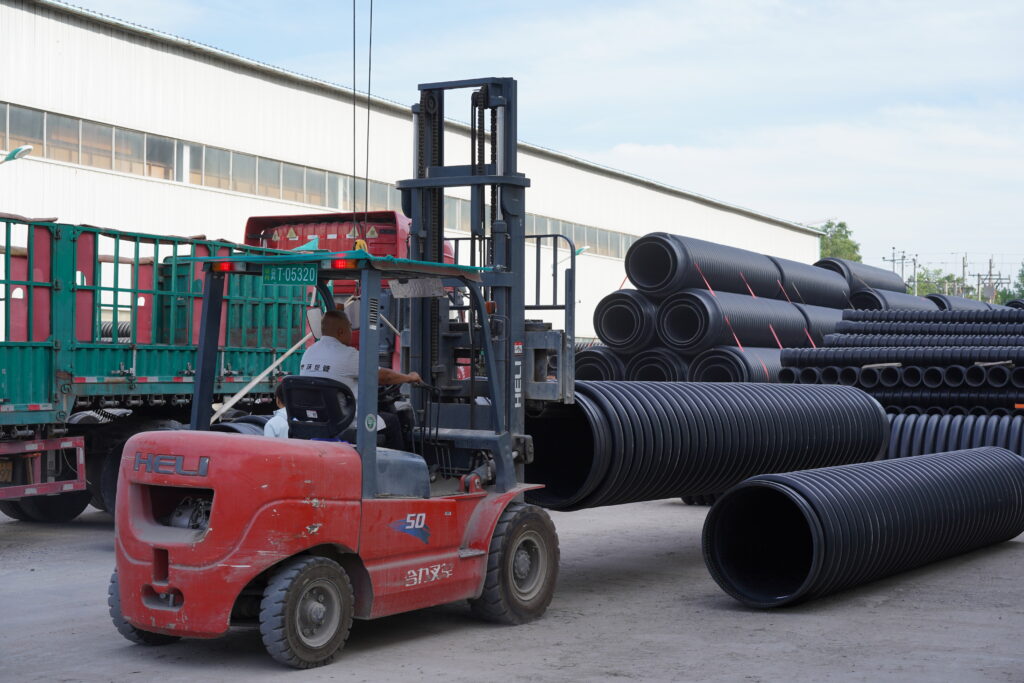
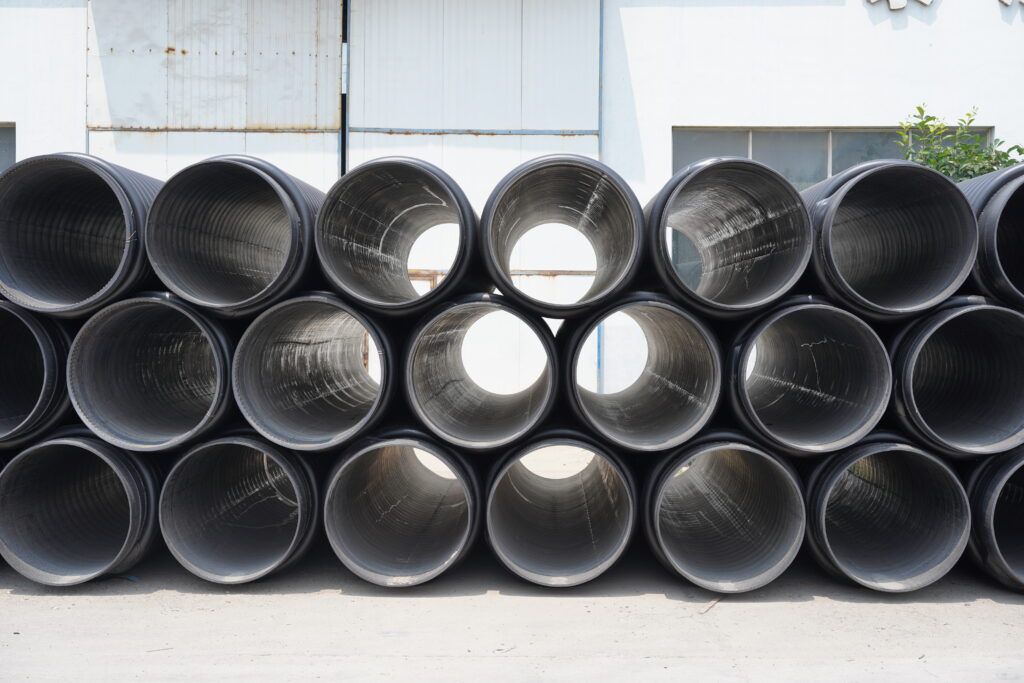
Krah pipes are manufactured from high-density polyethylene (HDPE) or high-modulus polypropylene (PP-HM), with reinforcing ribs wound around the outside of the pipe to form a strong structural profile.
Thanks to the reinforced structural profile, Krah pipes can reduce raw material consumption by up to 60% while significantly improving radial strength and ring stiffness. Even with large pipe diameters, Krah pipes can effectively withstand soil pressure and traffic loads.
As Krah pipes are manufactured from HDPE or PP-HM, they offer a range of excellent properties, including high chemical resistance and corrosion resistance, low hydraulic friction, excellent flexibility and elasticity, lightweight construction, easy installation, and fast jointing.
These advantages make Krah pipes an ideal solution for large-diameter drainage and other underground infrastructure applications.
Our Capabilities
Taiwo Plastic Pipe has 16 years of experience in Krah pipe manufacturing and uses advanced production lines and proven raw material formulations to ensure high quality and cost efficiency.
Our pipe diameter and length can be customized, and OEM production is also available.
We provide professional after-sales and technical support. Our team can assist customers by phone and, when on-site support is required, arrive within 48 hours and provide solutions within 72 hours.
We also provide hot-melt welding equipment, tools, and technical support for installation.
Our company is certified as a High-Tech Enterprise and Technology-Based Enterprise.
Global Applications of Krah Pipes
With their outstanding performance, advanced manufacturing technology, automated welding processes, and simple and efficient installation methods, Krah pipes have attracted worldwide attention for nearly four decades.
Krah pipes have been widely adopted in many countries and regions, including the United States, Germany, Japan, the United Kingdom, New Zealand, Australia, Spain, Turkey, Russia, and the Middle East. These large-diameter structured-wall pipes are widely used in municipal infrastructure, water supply projects, coal and gas transportation, agricultural irrigation, and other applications, contributing to infrastructure development and economic growth in these regions.
In China, Krah pipes have been widely adopted in municipal projects across many provinces and cities. They have also been used in a wide range of major infrastructure projects, including ports, nuclear power plants, steel mills, petrochemical facilities, thermal power plants, terminals, and other large-scale industrial projects.
With their excellent structural performance, corrosion resistance, lightweight construction, and efficient installation, Krah pipes have become an increasingly popular solution for large-diameter underground infrastructure projects.
Advantages of Krah Pipes
1. Excellent Physical Properties
High-density polyethylene (HDPE) and polypropylene (PP) offer an excellent combination of rigidity, strength, flexibility, and creep resistance. They also have excellent heat-fusion properties, which facilitate the installation and jointing of thermally wound structured-wall pipes.
2. Excellent Corrosion Resistance and Long Service Life
HDPE and PP are highly resistant to a wide range of chemical media, making Krah pipes particularly suitable for areas with high groundwater levels and high soil moisture, such as coastal regions. No additional anti-corrosion treatment is required.
In addition, HDPE and PP do not promote the growth of algae, bacteria, or fungi. With proper design, installation, and operating conditions, Krah pipes can provide a service life of up to 100 years.
3. High-Quality Fusion Joints and Integrated Structure
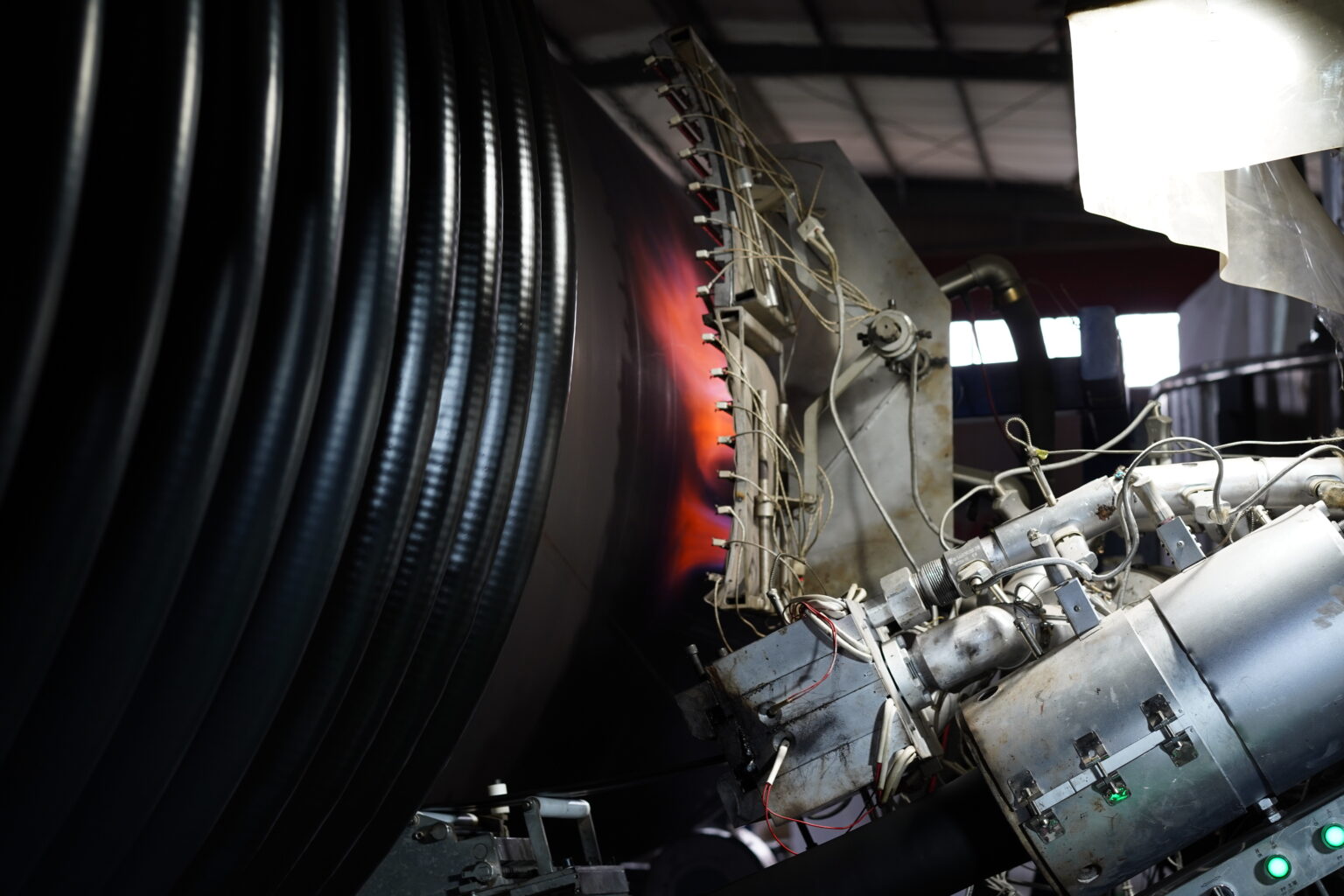
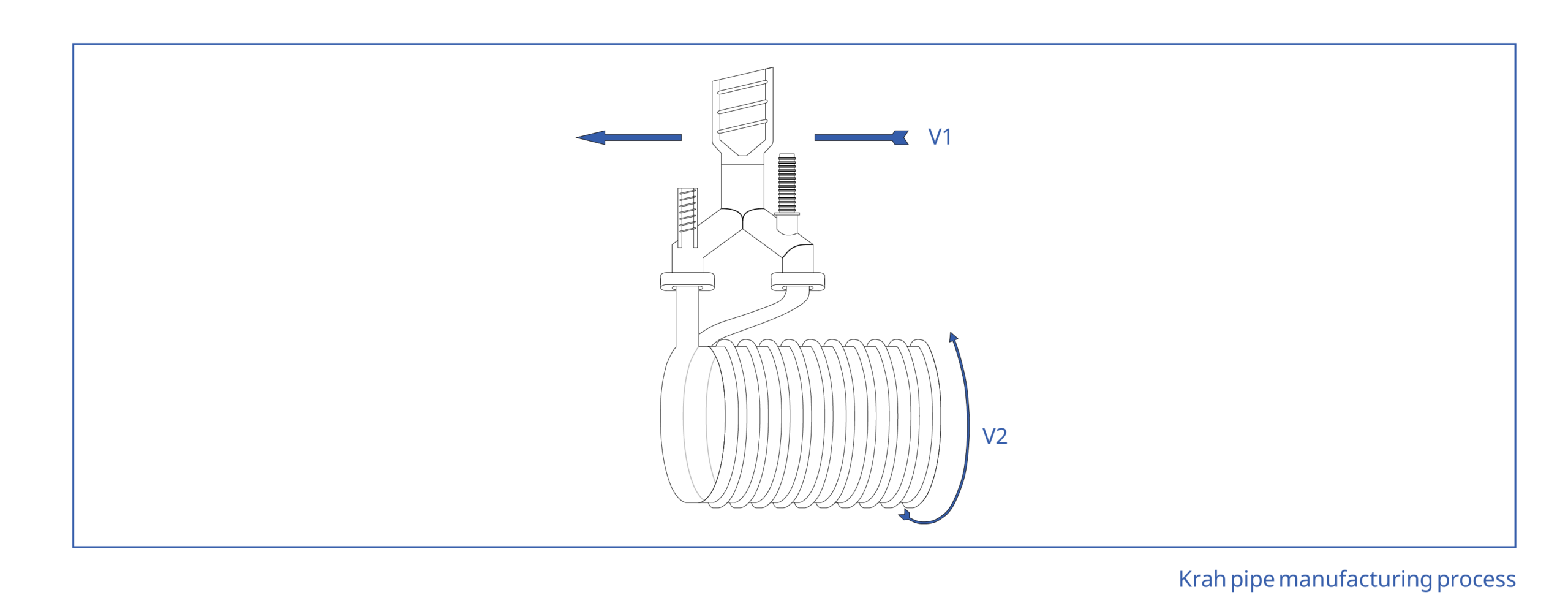
During the hot-winding manufacturing process, the molten flat strip and reinforcing profile extruded from the extrusion die are continuously and uniformly wound onto a heated steel mandrel at predetermined positions. This process ensures high-quality fusion joints, a smooth inner surface, and strong bonding between the reinforcing profile and the flat strip.
The pipes are cooled using air cooling, which helps ensure uniform cooling of the material. In the structural design, the fusion joints between the flat strips are covered by the reinforcing profiles, further improving the pipe’s resistance to external pressure.
The flat-strip layers and structural reinforcement layers are fused together while in a molten state, resulting in high-quality fusion joints with minimal residual stress. This integrated structure provides excellent overall strength and structural performance.
Ring Flexibility
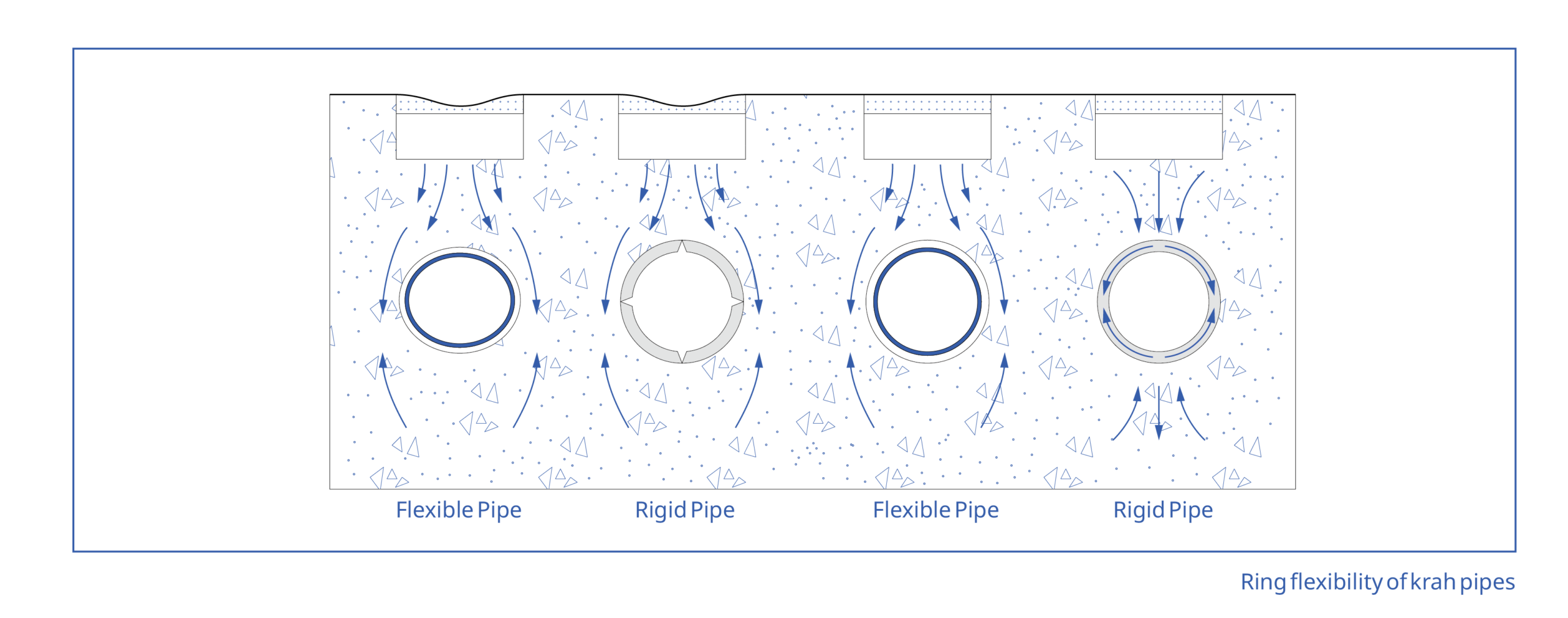
Krah pipes are classified as flexible pipes. When subjected to external loads, a flexible pipe can undergo significant deformation before failure, whereas a rigid pipe generally cannot tolerate significant deformation before structural failure.
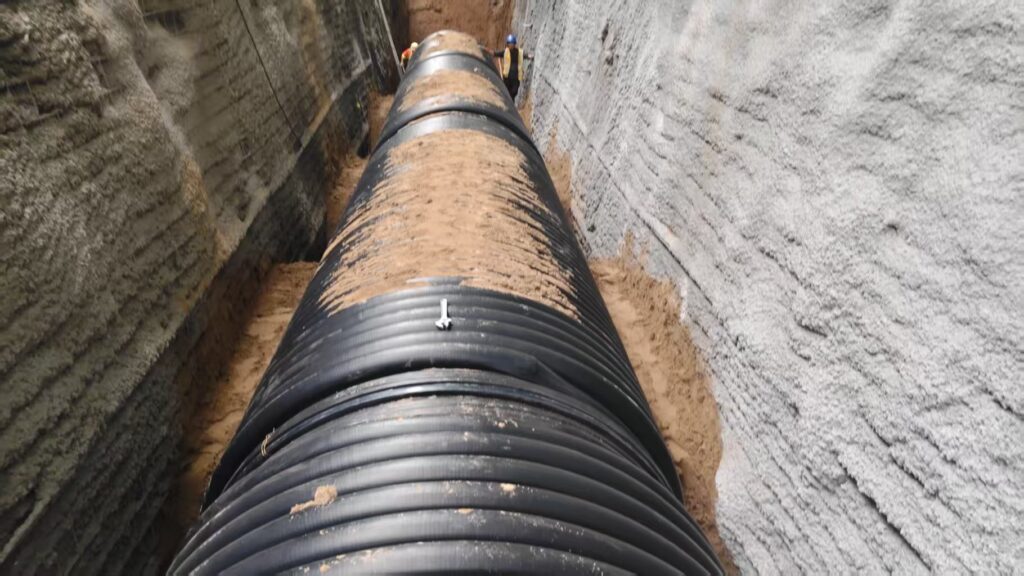
Under the same external load, the stresses developed in the wall of a flexible pipe are relatively lower. The pipe and the surrounding backfill soil work together to carry the applied load, forming a pipe-soil interaction system.
Therefore, buried plastic drainage pipes do not need to have the same strength and stiffness as rigid concrete pipes. With an appropriate level of stiffness and proper installation, flexible plastic pipes can fully meet the required service performance. This has been demonstrated through extensive practical applications in developed European countries.
Excellent Toughness and Flexibility
Krah pipes made from high-density polyethylene (HDPE) or polypropylene (PP) are highly tough and flexible. Their elongation at break can exceed 500%, giving them excellent adaptability to uneven settlement and displacement of the pipe foundation.
Their outstanding flexibility and ductility also provide excellent seismic resistance, making them particularly suitable for areas prone to earthquakes. Practical applications around the world have demonstrated the excellent earthquake resistance of HDPE and PP Krah pipes.
During installation, Krah pipes can be bent within their allowable bending radius to bypass obstacles, reducing installation difficulties and providing greater flexibility in construction.
High Flow Capacity and Excellent Hydraulic Performance
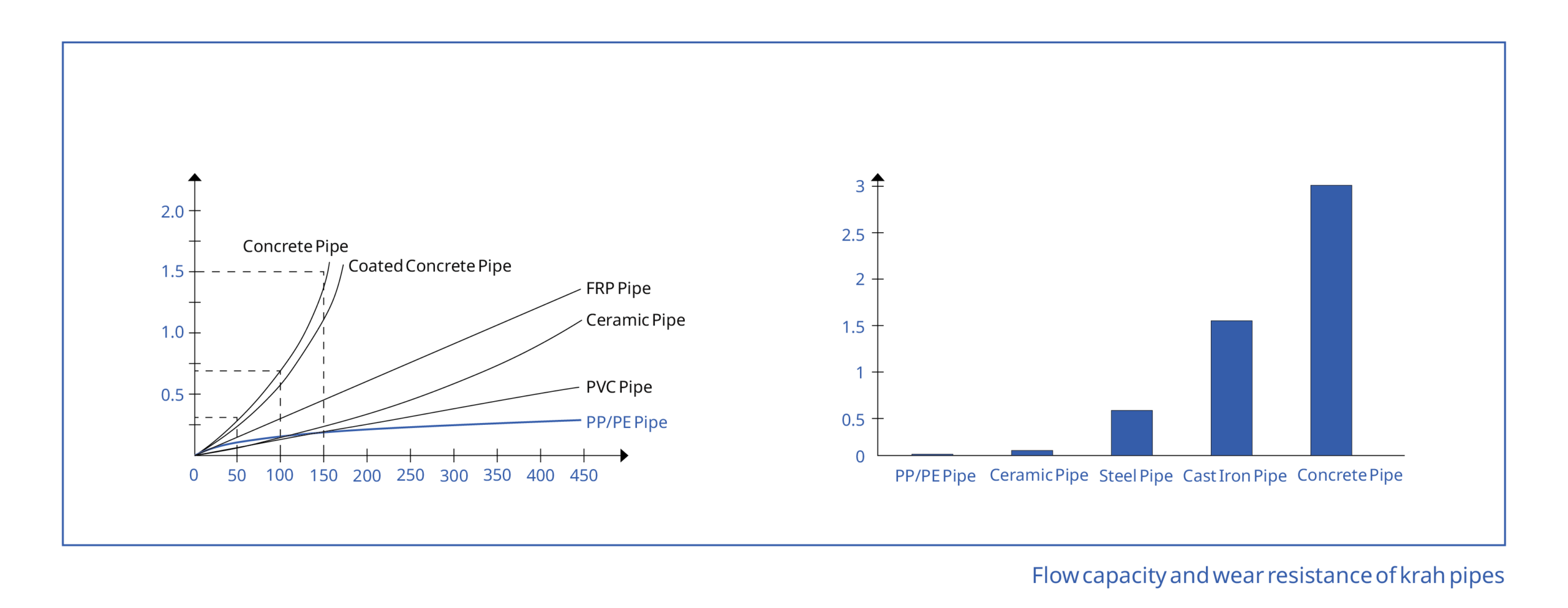
Economical and efficient. Krah pipes made from high-density polyethylene (HDPE) or polypropylene (PP) have a smooth inner surface that resists scaling and buildup. Their equivalent absolute roughness is approximately 1/20 that of steel pipes, resulting in significantly lower flow resistance.
Under the same pipe diameter, length, and pressure conditions, HDPE and PP pipes can provide approximately 30% greater flow capacity than steel pipes, offering significant economic advantages in fluid transportation applications.
Excellent Wear Resistance
Comparative wear-resistance tests between HDPE or PP pipes and steel pipes have shown that HDPE and PP pipes can provide approximately four times the wear resistance of steel pipes.
This excellent wear resistance makes Krah pipes particularly suitable for applications involving abrasive media, such as wastewater, slurry, and other materials containing solid particles.
Excellent Resistance to Stress Cracking
Krah pipes made from high-density polyethylene (HDPE) or polypropylene (PP) have low notch sensitivity and excellent resistance to crack initiation and propagation. Their high shear strength and outstanding resistance to surface damage provide excellent resistance to environmental stress cracking (ESCR).
These properties give Krah pipes excellent long-term durability and reliability, even under demanding underground operating conditions.
Excellent Installation Performance
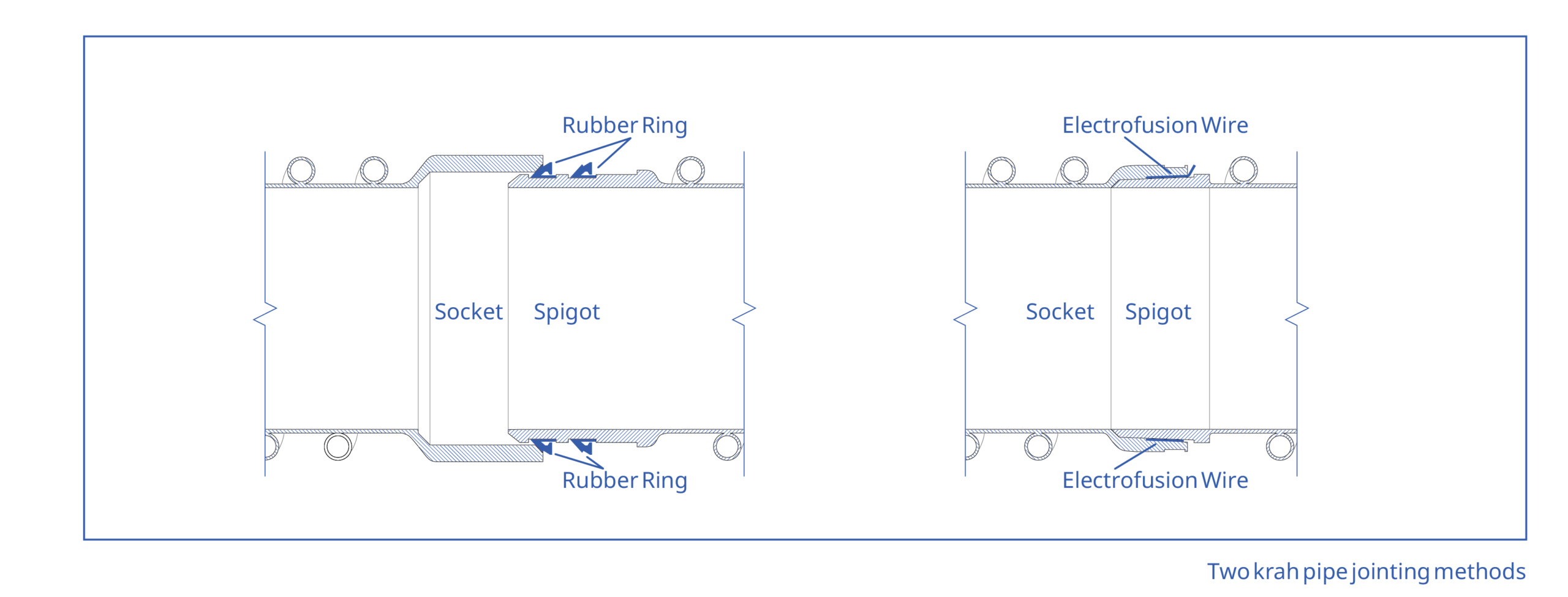
Krah pipes can be connected using an integrated electrofusion jointing system, with electrofusion wire pre-embedded in the socket and made from the same material as the pipe. This provides high-quality, reliable joints and can achieve leak-free connections, helping ensure the long-term service life and operational safety of the entire pipeline system.
Krah pipes can also be connected using rubber gasket joints, making them particularly suitable for projects in areas with frequent rainfall or wet installation conditions.
Compared with other pipe materials under similar application conditions, Krah pipes are lightweight, making them easier and more economical to transport and install. Their convenient and efficient installation can significantly reduce construction costs.
Environmentally Friendly
Krah pipes are made from high-density polyethylene (HDPE) and polypropylene (PP), both of which are 100% recyclable. This makes Krah pipes an environmentally friendly and sustainable solution for modern infrastructure projects.