Transportation, Storage and Handling of Pipes and Fittings
Pipes and fittings must be transported using suitable vehicles and appropriate handling equipment. Throughout transportation, loading, unloading, and on-site handling, all products should be carefully protected to prevent impact, deformation, scratching, or other forms of damage.
Before unloading, the receiving personnel should carefully inspect the pipes, fittings, and other products on the vehicle. Any visible damage, deformation, or missing components should be reported to the truck driver immediately and clearly recorded on the relevant delivery or shipping documents. Damaged products should be identified and separated to prevent them from being accidentally installed.
The contractor or site management team should designate a suitable storage area before the products arrive at the construction site. The storage area should be level, stable, clean, and free from large stones, sharp objects, construction debris, or other materials that could damage the pipes. It should also be located away from heavy construction traffic and other activities that may cause accidental impact.
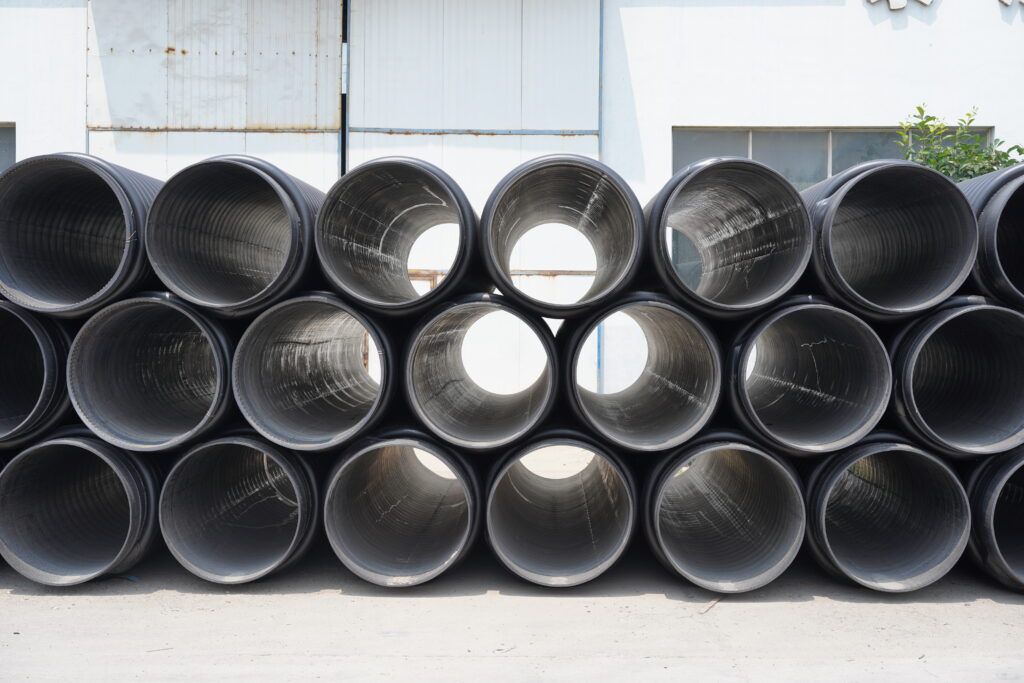
Pipes should be placed on a stable surface and properly supported during storage. Care should be taken to prevent pipes from rolling, sliding, or being exposed to unnecessary mechanical impact. Where possible, pipes should be protected from contamination and excessive exposure to conditions that could affect their condition before installation.
Unloading of Pipes
- When cranes, hoists, or other lifting equipment are used to unload pipes, only suitable lifting belts or soft slings should be used. Steel wire ropes, chains, hooks, or other sharp-edged lifting devices should not come into direct contact with the pipe surface, as they may cause scratches, cuts, or other damage.
- Before lifting, all lifting belts and slings should be inspected to ensure that they are in good condition and have sufficient load-bearing capacity for the pipes being handled.
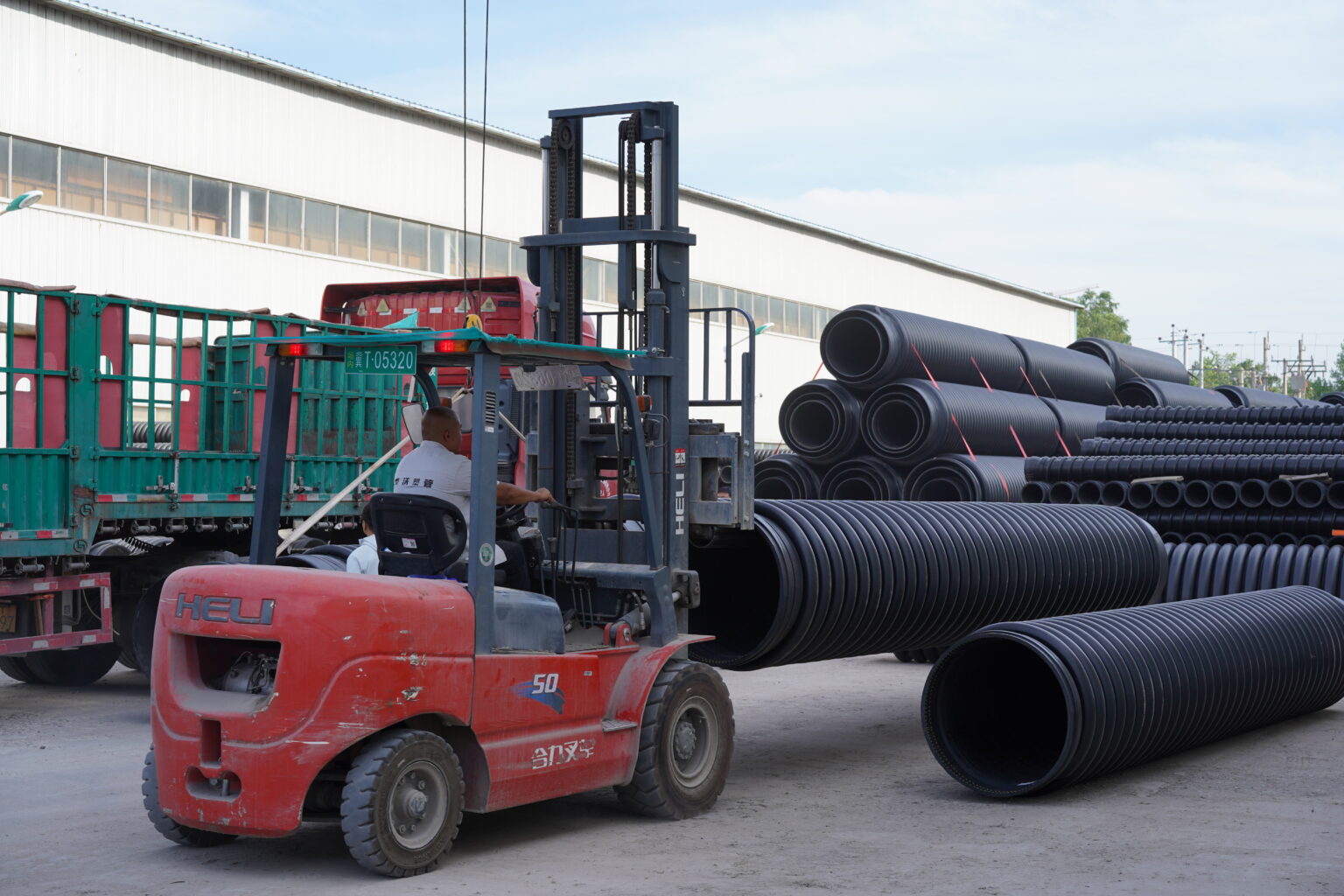
- When using a forklift to unload pipes, the forks should be carefully inspected for sharp edges, burrs, or other projections that could damage the pipe. Protective material, such as suitable protective film or rubber covering, should be placed around the fork tips where necessary.
- When handling large-diameter pipes, the operator should ensure that the pipe is properly balanced and securely supported before lifting. Sudden lifting, dropping, dragging, or rolling of pipes should be avoided.
- Pipes should never be thrown from the vehicle or allowed to fall freely during unloading. All lifting and handling operations should be carried out slowly and under proper supervision.
Unloading of Fittings
The same general handling and safety requirements applicable to pipes should also be followed when unloading fittings.
- When lifting fittings, the lifting belts should be securely attached to all factory-installed lifting brackets or designated lifting points.
- All designated lifting points should be used together. Do not attach the lifting equipment to only part of the available brackets, as uneven loading may cause the fitting to become unstable or damaged during lifting.
- Before lifting, check that every lifting belt is correctly positioned and securely fastened to the designated brackets. The lifting arrangement should be inspected by the responsible site personnel before the load is raised.
- Fittings should be lifted smoothly and evenly to prevent sudden movement, swinging, or impact against other products, vehicles, or structures.
- Personnel should remain clear of the suspended load during lifting and unloading operations. No person should stand underneath a suspended pipe or fitting.
Proper transportation, storage, and unloading procedures are essential to maintaining the structural integrity and service performance of Krah pipes and fittings. Careful handling from the time of delivery through to installation can significantly reduce the risk of product damage and ensure safe and efficient construction on site.